Skip to content
Skip to content
Wellesley Institute
  • Our work
    • About our work
    • Health equity
    • Social determinants of health
    • Work streams
  • Research
  • Policy
  • About
    • About us
    • Our history
    • Governance and leadership
    • Strategic Plan
    • Impact Reports
    • Careers

HomeWork streams

Social inclusion

Wellesley blue coloured block
May 19, 2020
Research

No one left behind: Exploring thriving income among the Black population in the City of Toronto

In this study, we aim to quantify the number of Black people, aged 25-40 years old, living alone in Toronto…

Wellesley Institute
May 14, 2020
Blog

Staying (dis)connected? Toronto’s digital divides under COVID-19

From Zoom meetings and Google Classroom lectures, to around-the-clock news updates, COVID-19 has forced Torontonians to rely on digital technologies…

Wellesley Institute
October 31, 2019
Research

Do Syrian refugees perceive improved physical and mental health a year after resettling in Canada?

Refugees often deal with many issues that increase their vulnerability to diseases during the migration process. Refugees are extremely resilient…

Brenda Roche and Kwame McKenzie
October 7, 2019
Research

Prevalence and Predictors of Everyday Discrimination in Canada: Findings from the Canadian Community Health Survey

National research on discrimination in Canada has been slim. Discrimination impacts many areas of life including health, social and economic…

Wellesley Institute
July 31, 2019
Research

Snapshot: Social Inclusion in Toronto

This is a synopsis of the report “Promoting Health and Well-Being Through Social Inclusion in Toronto: Synthesis of International and…

Wellesley Institute
July 29, 2019
Research

Promoting Health and Well-Being through Social Inclusion in Toronto

Social inclusion is increasingly being recognized as a social determinant of health. Though there is no singular definition of social…

Sarah Sanford and Brenda Roche
July 23, 2019
Research

Inclusive cities and the experiences of racialized youth
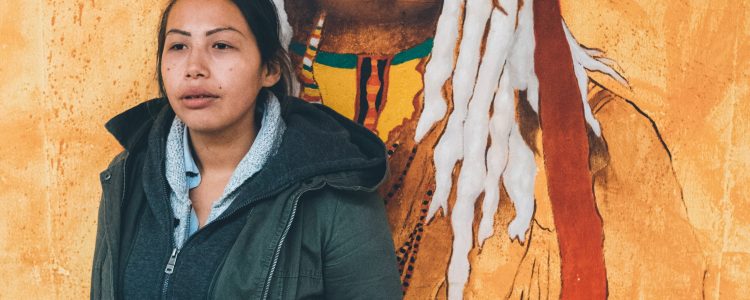
In many cities, racialized youth can often feel socially excluded and isolated; they may not have public spaces they can…

Anjana Aery
June 13, 2019
Research

Towards Understanding and Supporting Marginalized Children and Youth in Ontario: The Case of Growing Up Indigenous

Our children and youth are our future leaders and influencers with ambitious dreams and aspirations. Yet the playing field to…

Wellesley Institute
Social network - vector illustration.
June 6, 2017
Research

Community Capital: Leveraging inter-organizational networks to improve youth employment equity

A community’s capital ranges from individual level talent and expertise to community level resources. But central to the concept of…

Emma Ware
People in a circle with their arMS around each other
October 26, 2016
Research

Thriving Together: A Scoping Review of Interventions to Improve Refugee Social Capital & Health

The purpose of this scoping review is to identify interventions that have improved aspects of refugee social capital resulting in…

Wellesley Institute
Expo 2025 Canada
October 24, 2016
Research

Expo 2025: Health and Health Equity Impact Assessment

Expo 2025 presents Toronto with an opportunity to move forward initiatives that leverage the City’s diverse population and neighbourhoods and…

Wellesley Institute
People working collaboratively in an office
April 15, 2016
Research

What does a Connected Communities Project look like in Toronto? WILABS Report

On Wednesday March 2, 2016 Wellesley Institute invited partners, collaborators and colleagues to participate in a Wellesley Institute Lab. The objective…

Wellesley Institute
  • Previous page«
  • 1
  • 2
  • 3
  • 4
  • Next page»

Wellesley Institute is more than a think tank. We are a catalyst for change.

Subscribe to our e-news

Get connected

  • Find us on linkedin (opens in a new tab)
  • Find us on bluesky (opens in a new tab)
  • Newsroom
  • Blog
  • About
  • Careers
  • Contact us

Wellesley Institute
201 Gerrard Street E.
Toronto, ON M5A 2E7

©2026 Wellesley Institute. All rights reserved. Privacy Accessibility

Back to top

Search form